

Businesses that rely on propane know the challenges of reactive fuel management, from monitoring gauges to scrambling for last-minute refills and absorbing unpredictable costs. Bulk propane delivery offers a strategic shift that eliminates these inefficiencies.
With scheduled deliveries, volume pricing and automated tank monitoring, commercial propane delivery turns fuel supply into a seamless part of your operations. You can reduce costs, prevent downtime and free up resources to focus on what matters most.
Buying in bulk can secure lower per-gallon rates. Delivery schedules help businesses budget predictably while avoiding reactive price spikes that come with urgent, last-minute orders placed at spot market rates.
When evaluating a bulk propane supplier, look for one that offers volume discounts and has the purchasing scale to keep your per-gallon costs competitive. Commercial propane suppliers with high purchasing volume can pass savings along to their customers through structured pricing agreements. Pre-agreed delivery schedules remove the risk of placing emergency orders during market volatility, giving you greater control over your fuel budget throughout the year.
Running low on propane can stall operations, delay production schedules, and leave workers idle on the clock. Every process downstream of your fuel supply is affected when levels dip too low. Avoid this scenario by pairing bulk delivery with an auto-fill program for a steady, proactive supply.
Working with a bulk propane supplier that offers auto-fill delivery means your driver monitors your tank levels and tops you off before you reach a critical low. Remote tank monitoring takes this a step further by automatically alerting the supplier when the supply falls below a set level, triggering proactive delivery before you’re affected.
The right bulk propane supplier takes fuel management entirely off your plate. With auto-fill, employees don’t watch gauges, make calls or coordinate pickups. The supplier handles monitoring and scheduling on your behalf.
Your team can focus on completing jobs, rather than filling up a tank. When you’re managing a harvest window, a production run or a jobsite deadline, one fewer operational variable can make a real difference.

Propane is a by-product of natural gas processing and crude oil refining. It’s a cleaner-burning fuel choice for commercial operations.
According to the U.S. Energy Information Administration, propane emits 12.68 pounds of CO2 per gallon compared to 22.45 for diesel and 18.73 for finished motor gasoline. Beyond lower carbon emissions, propane presents no threat to soil, surface water or groundwater if released, and it’s nontoxic and vaporizes harmlessly in air.
Propane use reduces greenhouse gas emissions by nearly 13%, making it a practical choice for businesses working toward sustainability goals or navigating emissions standards like EPA air quality requirements. Propane contains less carbon than gasoline or diesel, producing less unburned carbon and fewer combustion byproducts with every cycle, meaning cleaner output from the same energy input.
A reliable bulk propane supplier should be able to build a delivery schedule around your operation. Every business has different consumption patterns, and bulk delivery should be tailored to match. Whether you need weekly, biweekly or monthly deliveries, a provider should work with you to set a rhythm that prevents disruption.
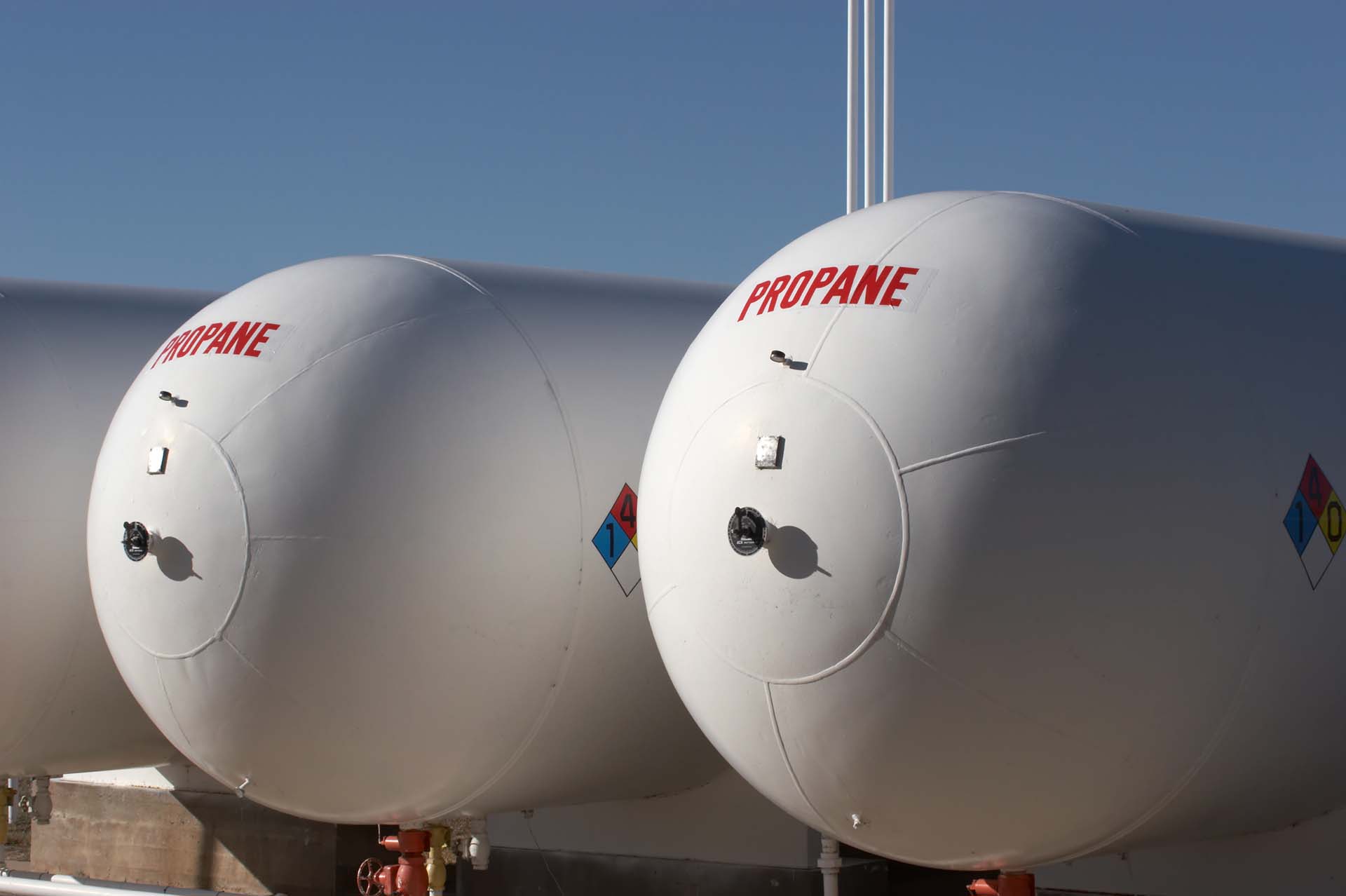
Getting started with bulk propane delivery typically begins with commercial propane tank installation. A supplier that handles on-site installation ensures your storage is correctly sized for your consumption before scheduled deliveries begin.
Will-call is also an option for businesses that prefer to manage deliveries on their own terms. When evaluating commercial propane delivery near you, look for a supplier with a broad geographic reach and licensing to ensure consistent service regardless of location.
Bulk propane delivery supports a wide range of industries. The benefits of cost savings, supply reliability and simplified management apply across sectors, but certain businesses rely especially heavily on commercial propane delivery to keep operations running smoothly.
Construction sites run on propane for temporary heating, powering generators, asphalt drying equipment and on-site tools. Unlike diesel, propane doesn’t gel in cold weather. It stores on-site in tanks, needs no grid connection,and performs reliably in subzero temperatures, which keeps crews fueled wherever the job takes them.
Construction teams should look for a bulk propane supplier that offers direct-to-equipment delivery, ideally during off-hours, so crews arrive at a fueled site.
Manufacturers rely on propane to power industrial ovens, furnaces, boilers, forklifts and processing equipment. A consistent, uninterrupted propane supply is critical for maintaining production output. Manufacturing processes often can’t be paused mid-run without material waste, quality damage or costly restarts. In some cases, interruptions can ruin an entire batch.
Propane’s clean combustion helps facilities meet emissions standards without sacrificing performance. Propane-powered forklifts produce 99% fewer NOx emissions compared to Tier 3 diesel engines, making them a cleaner choice for indoor and outdoor material handling.
Propane plays a broad role in agriculture, from crop drying and greenhouse heating to flaming technology for weed control. Auto-fill and tank monitoring are particularly valuable for rural farm operations where accessibility is a challenge. Long distances from the nearest supplier and limited road accessibility mean an unexpected low-fuel situation takes longer to resolve and can disrupt critical operations. Monitoring tank levels remotely allows deliveries to be scheduled proactively based on usage, avoiding reactive calls.
Switching to a propane irrigation engine can cut operating costs by up to $4,000 per year. For heating, propane-fueled systems use 15%-20% less energy than indirect heaters. Also, propane irrigation engines save 40% or more on fuel costs compared to diesel and produce up to 18% fewer greenhouse gas emissions than gasoline and diesel.
Fleet-dependent businesses use propane autogas to power commercial delivery trucks, forklifts and municipal vehicles. Fleet fueling services that include on-site delivery and flexible scheduling keep operations moving efficiently. Getting bulk propane deliveries on-site and during off-hours means drivers can stay on the road.
Propane’s cleaner combustion also supports fleet emissions compliance goals. Propane reduces greenhouse gas emissions by nearly 13% for vehicle and fleet use, helping businesses meet environmental standards without compromising performance.
Foster Fuels is the strategic fuel partner built for commercial operations like yours. With over 100 years of experience and approximately 50 million gallons of product moved annually, we bring the expertise and scale to support your operations. Licensed in 48 states, we offer volume discounts, auto-fill programs and tank monitoring for commercial accounts.
Our fuel consultants work with you to create delivery schedules that prevent disruption and keep costs predictable. Contact us today to discuss how we can support your commercial propane needs.

Linked Sources: