
Safety is the top priority when using a flammable substance like propane, so there are strict regulations for the tanks engineered to hold the gas. Some of the most impactful regulations in place are those that cover the tank’s structural integrity. For example, a propane tank must display certain markings that verify its functionality as a gas storage and distribution system. Knowing where to find these markings and how to read them is essential. However, differences in style and varying laws complicate the situation.
The markings on small propane tanks — such as those used for gas grills and portable stoves — are different from those on larger tanks used to heat a home or other building. Adding to the confusion, some states have passed marking laws that differ from the federal mandate. Regardless of the type and regulating entity, all propane tanks have markings that look like expiration dates.
While it is true that the numbers are dates, a propane tank does not technically have an expiration. Instead, the numbers provide information about when the tank was manufactured and when it needs to be inspected for safety. In this post, we’ll shed some light on what the expiration date numbers mean, where you can locate them and what to do when the date arrives.
New Rules & Regulations For Owners of Propane Tanks
Depending on the type, a propane tank can last a decade or longer. Large, stationary propane tanks last up to 30 years with proper maintenance and recertification. A smaller propane tank for a grill can last up to 12 years. The long lifespan is convenient because there is no propane shelf life.
Propane does not expire — the gas will survive in its tank indefinitely. Its longevity makes it a great fuel source, but it also reinforces the need to implement safety measures during the tank’s lifespan. A propane tank’s markings help keep track of safety requirements.
A propane tank’s expiration date is actually an origin date. Large and small propane tanks alike each feature a numerical marking that indicates their month and year of manufacturing. The locations differ for each type.
Knowing the manufacturing date helps to determine if it has undergone the requalification process. A propane tank must be requalified a specific number of years after its manufacturing date. Requalification certifies that the tank and its components are structurally sound. After the first requalification, the tank must be requalified again every five or 10 years.
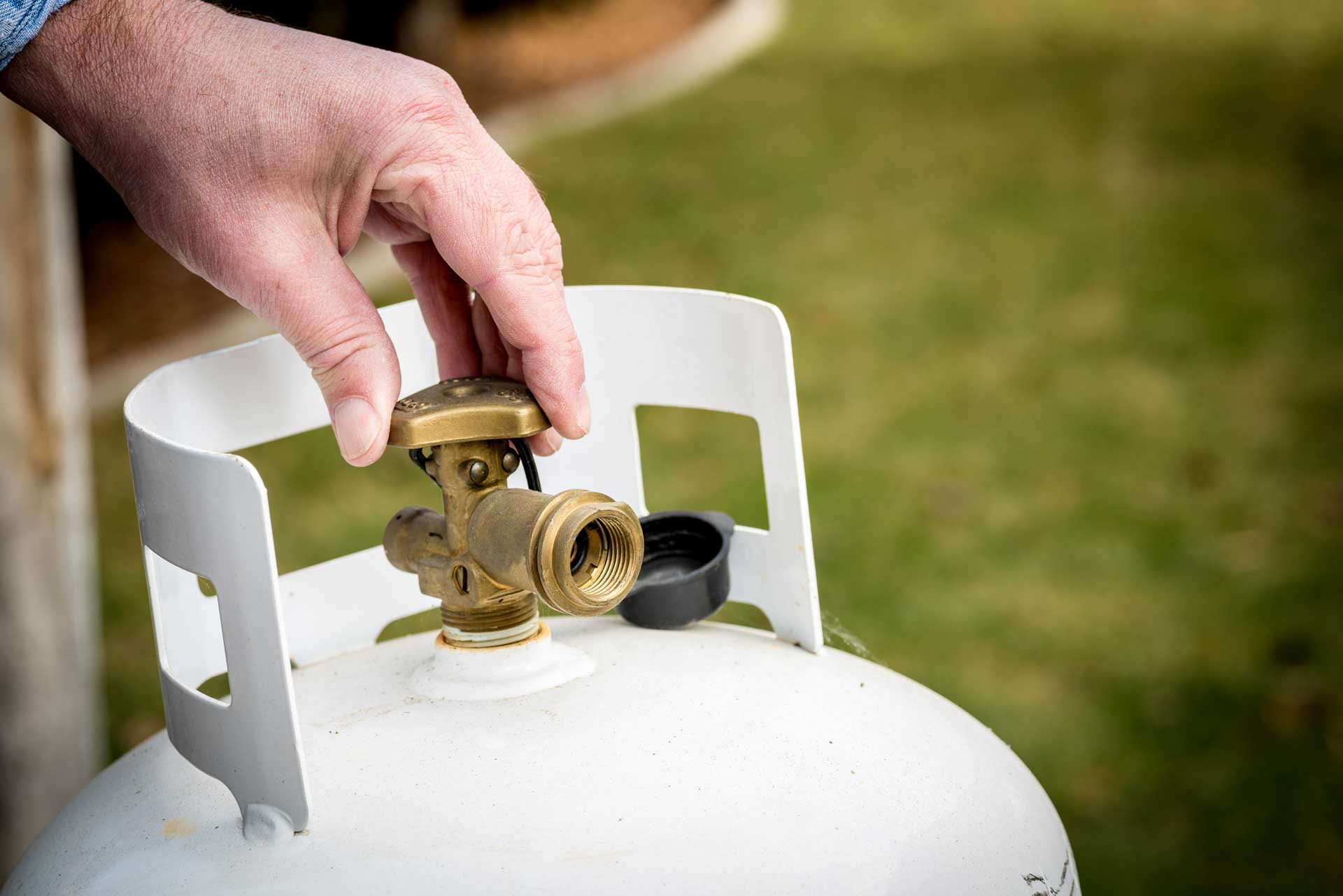
A propane tank’s date of manufacture or requalification date can be found stamped onto its collar. It will be in a month-year format — for instance, 06-21 for June 2021. To determine when your tank expires, simply add 12 years to the stamped date.
Propane tanks of 100-pound capacity or less have a requalification date of 12 years from the date of manufacture. Once those 12 years are up, you can either exchange the tank for a replacement or have it inspected for requalification for an additional five years of use.
We offer portable tank recertification for 30-100 pound tanks at our Forest, Rustburg, Lovingston and Danville showrooms. The recertification process usually takes 24-48 hours. If the cylinder is worthy of recertification, a trained Foster Fuels employee will complete a visual inspection and leak test. They will capture all tank information in a formal requalification log. If the cylinder is damaged, we can deny recertification.
In most states, large propane tanks used for home heat and hot water are governed by federal container laws. These laws dictate that a propane tank can only be filled by its owner or someone authorized to act for them. In practice, this means most home propane users lease their tank from a fuel supplier, who assumes responsibility for keeping track of its expiry date.
Les lois fédérales sur les contenants, ainsi que d'autres règlements régissant les dates d'expiration des petites citernes de propane, ont été approuvés par des groupes industriels de premier plan comme la National Propane Gas Association. Compte tenu de la nature spécialisée du propane et de la nécessité de disposer de réservoirs fiables et bien entretenus, ces lois contribuent à l'application d'une norme de sécurité qui protège tous les utilisateurs.
Tanks that have been requalified will have an E or H after the date. Don’t confuse the date with the tank weight rating, which is also stamped onto its collar. Tare weighting is always prefaced by the letters TW, i.e. TW18 for an 18 lb. tank.
Is your propane tank expired or do you have additional questions? Get in touch with Foster Fuels to speak with a representative directly and give us a call at 800-344-6457.
Consider these frequently asked questions about propane tank expiration — or requalification — dates.
For smaller propane tanks that have reached the 12-year manufactured date, you can either exchange them for new ones or have them inspected for prequalification for an additional five years of use.
If a 20-pound cylinder is outside of the 12-year manufactured date, it needs to be taken to a propane exchange facility. It can be exchanged for a lower cost than having it recertified. These cylinders can be purchased from one of our showrooms, but be sure to call ahead to check availability.
La date de fabrication est indiquée sur le collier de la bouteille de propane. Elle est indiquée au format mois-année. Si votre citerne a été fabriquée en septembre 2023, la date sera "09-23". Vous trouverez également un numéro d'identification unique sur le collier.
When disposing of old propane tanks, you need to contact the tank supplier for proper handling. If your propane supplier can’t take the old cylinders, reach out to your local household hazardous waste collection for assistance. For those in southern Virginia, we can help with the disposal process.
Pour assurer la sécurité et la conformité de votre réservoir de propane, il est important de le faire recertifier régulièrement. Vous vous demandez comment faire recertifier votre réservoir de propane ? Vous n'avez qu'à communiquer avec votre bureau local pour prendre rendez-vous. Lorsque vous apporterez votre réservoir pour le faire recertifier, le personnel l'inspectera minutieusement. Une fois l'inspection réussie, le personnel apposera sur votre citerne un autocollant indiquant la date de l'inspection et la date de recertification. Ainsi, vous pouvez avoir l'esprit tranquille en sachant que votre citerne de propane est en bon état de fonctionnement.
For any questions or to schedule your recertification appointment, give us a call at 800-344-6457 or reach out to Foster Fuels directly. We’re here to help!
La recertification pour le propane varie d'un État à l'autre et d'une entreprise à l'autre. En moyenne, la recertification peut coûter entre 20 et 60 dollars.
Alors que les nouvelles citernes de propane sont généralement homologuées pour une durée de 12 ans à compter de la date de fabrication aux États-Unis, les citernes recertifiées ne sont généralement valables que pour une durée de 5 à 7 ans, en fonction de la méthode de recertification.
No, propane does not go bad. Unlike other fuels, propane does not degrade or go bad over time. In other words, there is no shelf life of propane.
