
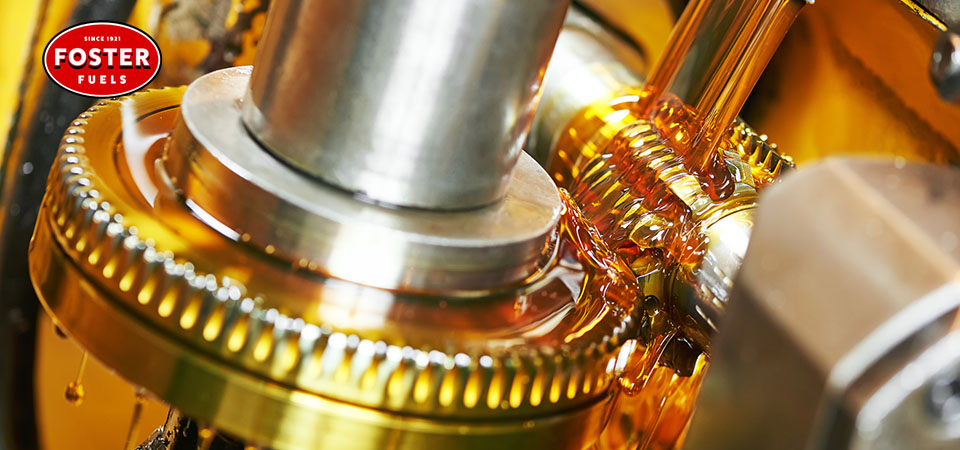
Properly lubricating your machinery can extend your equipment’s lifespan and support your fleet’s overall performance. Quality lubrication options can also benefit your business through long-term cost savings by helping prevent unscheduled breakdowns and enhancing your productivity.
Explore key considerations for equipment lubrication requirements and best practices to support continuous operations in the guide below.
Lubricants improve your machine’s overall performance. This can result in fewer delays and machine replacements, getting you a higher return on your investment and simplifying ongoing maintenance.
Here’s a summary of what lubricants can do:
Almost every mechanical device needs lubrication, whether in small or large amounts. A few examples of machinery and components that rely on proper lubrication for optimal performance include:
The type of lubricant you should use depends on your equipment model.
Lubricants are composed of a type of base oil with a selection of additives. This carefully balanced combination allows the lubricant to deliver optimal performance by maintaining its required viscosity across a wide range of high and low temperatures.
The environment, including the surface tension, electrical conductivity and system pressure requirements, where lubricants are used can vary significantly. Consider whether the lubricant is suitable based on the corrosiveness, moisture and dryness of the environment.
Lubricants are measured, tested and analyzed to determine their performance. Testing is based on various specifications, such as those from ASTM International, formerly known as the American Society for Testing and Materials.
Keep in mind that your machine affects your lubricants, too. Careful selection and following a few best practices are key to ensuring the maximum lifespan of both your lubricants and equipment.
Follow these four steps to ensure you’re following the correct equipment lubrication process:
To select the appropriate lubricant, consider what type of machinery you have, its operating conditions and the manufacturer’s recommendations. There are many different types of lubricants, each with unique applications. The main types include oil, grease, dry and penetrating options.
If your machines work under extreme conditions, synthetic choices may be appropriate. The benefits of synthetic lubricants for equipment include superior performance and more stable viscosity.
For equipment with high loads and low speeds, high-viscosity options may be suitable. In contrast, high-speed and low-load machines may do well with lower viscosity. You should also consider the appropriate temperature range. Choosing the wrong lubricant can lead to overheating or equipment failure.
After you determine the right lubricant, store it in a clean, cool and dry place away from direct sunlight. Regularly inspect the lubricant’s container and use appropriate transfer equipment to avoid contamination. If you need to restore your lubricant’s properties, filtration, centrifugation and dehydration processes may help.
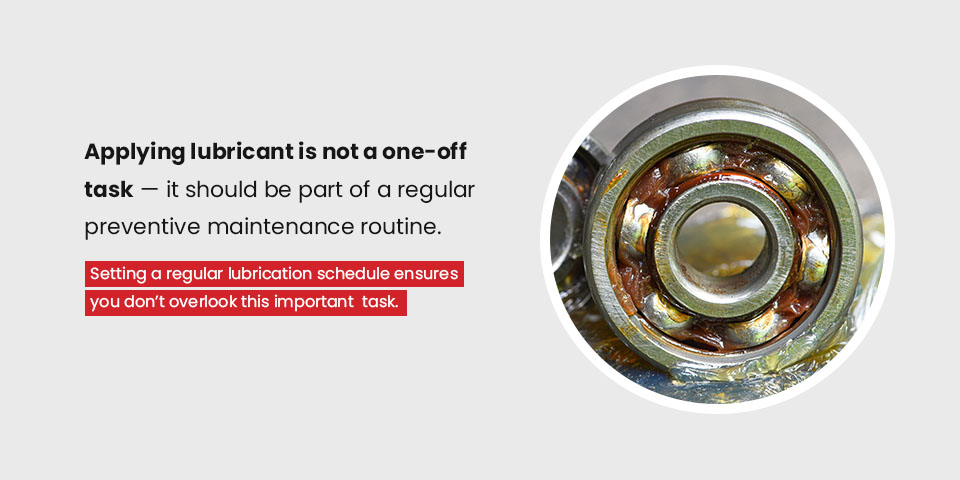
When it’s time to apply the lubricant, ensure your employees have sufficient training to do so. Applying lubricant is not a one-off task — it should be part of a regular preventive maintenance routine. Your employees should know about the specific equipment components that need lubrication, such as gears, bearings, chains and joints. Manufacturers may also provide guidelines on which parts of your machines need lubrication and how often you should do it.
Application techniques include:
Precision is key to avoid under- or over-lubrication. Setting a regular lubrication schedule ensures you don’t overlook this important task. You may need to lubricate equipment in dusty or high-temperature environments more often.
Monitor your equipment and lubricants to detect potential contamination or degradation. This can help you make data-backed decisions on whether you need to switch or recondition. Assess for the viscosity, contamination levels and depletion of additives. Consider adding lubricant analysis to your schedule for consistency.
A lubricant analysis software can help your team track lubricant conditions, manage schedules, interpret test results and optimize lubricant change intervals for peak performance.

Even lubricants have a finite life. Once you’ve identified that it’s time to dispose of your lubricant, you need to follow proper methods that are compliant with environmental regulations. Manage leaks and spills appropriately. You should also consider recycling or reconditioning if possible.
The United States Environmental Protection Agency highlights ways you can manage used oil. For instance, you can:
The useful life of a lubricant depends on its working conditions and the machinery you work with. Heavy tasks like working with heavy loads or shock loads can shorten its lifespan. You should use the data you gather in your analysis to determine what deteriorates your lubricant. The most important consideration is that your lubricant should be able to protect your equipment. Otherwise, it needs to be replaced.
Foster Fuels is a trusted bulk supplier of lubricants that can help you keep your operations running smoothly. Whether you’re looking for greases, motor oils, transmission fluids or food-grade lubricants, you can find a suitable option as we serve a wide variety of industries.
We also work with the best brands and manufacturers, like Shell, Starfire and Lucas Oil, to give you only the best quality products. We have been in business since 1921, so you know you are partnering with a knowledgeable and experienced company in the oil and gas industry.
Check out our wide selection of lubricants today.