

Maintaining a cold chain is nonnegotiable, especially when transporting medical supplies, perishable goods or mission-critical equipment. Reefer fuel, a specialized diesel used to power refrigerated trailer units, is at the heart of these temperature-controlled operations. It also carries significant implications for cost management, environmental compliance and operational risk.
Whether you manage transportation internally or partner with third-party carriers, knowing how reefer fuel affects your bottom line and how to future-proof your logistics strategy is key to success.
Reefer fuel is a diesel fuel used to power refrigerated trailers, commonly called reefers, which transport perishable goods such as food, pharmaceuticals and sensitive chemicals. When comparing reefer fuel vs. traditional fuels, reefer fuel is intended strictly for off-road use and is taxed differently by federal and state governments. The key distinctions between reefer fuel and on-road diesel include:
Reefer fuel plays a critical role in cold chain logistics, where maintaining strict temperatures is essential to product integrity. It powers reefer units to protect perishable or sensitive goods during transport. Reefer fuel must be handled, stored and documented according to specific regulatory guidelines to ensure proper use and tax compliance.
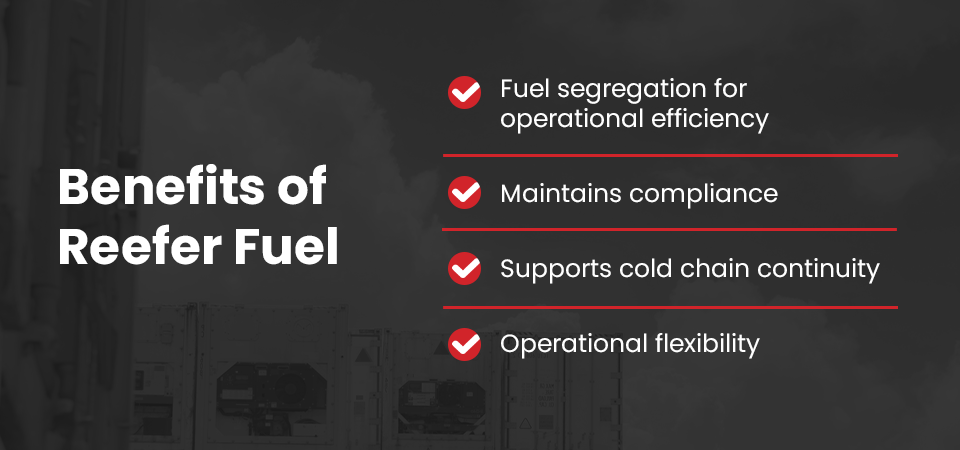
Reefer fuel offers several benefits from an operational, compliance and cost-management perspective:
Storing reefer fuel requires strict adherence to environmental, fire safety and regulatory guidelines. Because this is a dyed form of off-road diesel, it must be handled as a regulated fuel product and stored in appropriate containers or tanks designed for combustible liquids.
Reefer fuel must be stored in aboveground or underground tanks that meet requirements set by the Occupational Safety and Health Administration (OSHA), the EPA and local fire codes. Secondary containment systems, like berms or double-walled tanks, are essential to prevent leaks or spills from contaminating soil or water sources. Facilities must maintain updated Material Safety Data Sheets (MSDS) and follow labeling and placarding standards.
Fuel should be stored in well-ventilated areas, away from ignition sources, direct sunlight or extreme heat. While reefer fuel is not volatile like gasoline, it still poses combustion risks and should be monitored for temperature stability, especially in warmer climates or enclosed storage environments.
Tracking usage and inventory levels helps prevent theft, ensures delivery scheduling accuracy and maintains compliance. All access points should be locked, and fuel columns should be reconciled regularly. Digital fuel monitoring systems can assist with data logging and audit preparation.
To ensure uninterrupted cold chain operations, choose the right delivery model based on operational fleet size, route structure and response needs. These fuel delivery services support operational readiness and regulatory compliance for reefer units:
Reefer units traditionally run on off-road diesel fuel, which contains high amounts of sulfur. This contributes to increased particulate matter (PM) and nitrogen oxides (NOx) emissions, which are regulated under the Clean Air Act. These emissions can increase an organization’s carbon footprint and lead to compliance risks.
In worst-case scenarios, failing to comply with environmental regulations tied to reefer operations can result in fines, delivery disruptions and even contract disqualification, especially for vendors working with sustainability-conscious federal agencies. These risks directly affect the bottom line through increased operational costs. Mitigating these risks involves:
The future is trending away from traditional diesel toward cleaner, more efficient alternatives that align with tightening environmental regulations and growing sustainability requirements. Data-driven fleet management is gaining importance. Smart systems monitor emissions, fuel usage and equipment performance, enabling proactive maintenance and greater efficiency across the supply chain.
Underground reefer container storage (URCS) moves reefer storage away from sun-exposed yards, reducing energy consumption and potentially lowering carbon dioxide emissions by 61%. This enhances operational planning but comes with a significant upfront investment cost, which will require public-private partnerships and green funding initiatives for widespread future adoption.
From reducing emissions to preventing spoilage and minimizing costs, how you power your cold chain directly impacts contract outcomes and agency trust. Reefer fuel is critical in cold chain logistics, but how it’s managed will define your operational success and the future of your logistics.
Foster Fuels has delivered fuel to various industries since 1921. Stationed throughout the U.S., we deliver millions of gallons of fuel across the country every year. Arrange for regular fuel delivery, call on us for emergency fuel services or arrange for on-site fueling. Our dedicated team will ensure your business has the fuel it needs when it needs it.
Contact us today for your fuel needs.